You walk past your shop. You look at the window. And there it is: a bubble, a peeling corner, or a logo so faded it looks like it gave up. It looks unprofessional. And in a competitive market like Melbourne, that costs you customers.
Window graphics don’t just randomly fail. Almost every case of bubbling, peeling or fading comes down to three things: dirty glass before installation, the wrong vinyl material, or zero upkeep after the job.
Fix those three things, and your custom window graphics can easily last 5–7 years. Keep ignoring them, and you’ll be replacing your shopfront branding every 12–18 months.
I’m breaking down the real causes of adhesive failure, what UV exposure actually does to your signage, and why the advice to “just patch it up” is a trap.
Table of Contents
ToggleKey Points
- Bubbling is almost always caused by poor surface prep or the wrong vinyl, not a faulty product.
- UV fading on Melbourne shopfront branding can begin within 12 months without a proper UV laminate.
- Peeling edges often come down to the wrong adhesive specification, not just bad installation technique.
- Laminated window graphics cost slightly more upfront but can last twice as long outdoors.
Why Are Your Window Graphics Bubbling?
This is the most common complaint I hear. And almost every time, the problem started on installation day, not weeks later.
The Glass Wasn’t Properly Cleaned
I’ve seen expensive shopfront branding jobs fall apart because someone wiped the glass with a damp cloth and thought that was enough. It’s not. Glass holds invisible residue like old cleaning chemicals, silicone from previous films, and dust. When self-adhesive graphics go onto a contaminated surface, the adhesive sticks to that grime instead of the glass. Bubbles follow.
Good installers clean glass in two stages: a detergent wash first, a full dry time, and then an isopropyl alcohol wipe. That extra step makes a massive difference.
It Was Too Hot During Installation
Vinyl has a temperature range where it applies correctly: roughly 15°C to 25°C. In Melbourne, that window closes fast. Install perforated window film on a 35°C afternoon on a north-facing glass panel, and the adhesive activates unevenly. You won’t see the bubbles straight away. They show up a week later, after you’ve already paid.
Wrong Vinyl for the Job
There are two main types of vinyl used in graphic installation. Calendered vinyl is cheaper and stiffer. It’s fine for short-term indoor use. Cast vinyl is more flexible, more durable, and built for outdoor conditions.
I’ve seen businesses choose calendered vinyl for curved shopfront glass just to save money. Six months later, the edges are peeling and the graphic is pulling away from the frame.
Why Do Window Graphics Fade So Fast in Australian Weather?
Because Australia’s UV is genuinely brutal. Melbourne might not feel as harsh as Queensland, but the numbers tell a different story.
ARPANSA (Australian Radiation Protection and Nuclear Safety Agency) measures real-time UV Index levels across Australian capital cities, including Melbourne. In summer, Melbourne regularly reaches UV Index 10–12, which is classified as extreme (11+).
For your storefront advertising, that means unlaminated vinyl decals can start fading within 12 months on east- or west-facing glass. Blues go green. Reds go pink. Your brand starts looking tired before it should.
The fix is simple: lamination.
A UV-inhibiting overlaminate sits on top of the graphic and blocks the rays that break down ink. It adds around 10–15% to your job cost. But it can double how long your graphics last. So yes, laminated custom window stickers are absolutely worth it.
Why Are the Edges Always the First to Go?
Peeling edges are their own specific problem. Here’s what causes them:
- Graphic installed too close to the frame: moisture gets underneath and loosens the adhesive
- No edge sealing after installation: a quick step many budget installers skip
- Cleaning with ammonia-based products: these actively break down adhesive bonds over time
- High-pressure window washing: cleaning contractors often don’t know the graphics are there
- Melbourne’s temperature swings: glass expands and contracts constantly, and weak adhesive edges lift first
Here’s something most sign companies won’t say out loud: edge peeling is usually a material problem, not just a technique problem. Some commercial glass has special coatings that resist bonding. If the wrong adhesive vinyl was specified for that surface, no installer can save it. The problem was baked in before anyone picked up a squeegee.
Can You Fix Window Graphics Without Replacing Them?
Sometimes. But it depends on the damage.
You can repair:
- Small bubbles caught within 48 hours: a fine needle and gentle pressure often sorts them
- Edges lifting early: edge sealant or re-adhesive can help if caught quickly
- Light surface scuffs that haven’t gone through the laminate
You can’t repair:
- Faded graphics: UV damage to ink is permanent, full stop
- Large-scale bubbling: the adhesive layer is gone
- Graphics that have already peeled significantly: resticking rarely holds
And if your window decals are over 4 years old with multiple failure points, replacement almost always makes more financial sense than repairs. Fresh custom graphics with the right materials and a proper install will always outperform a patched-up old job.
What Do Professional Installers Actually Do Differently?
“The difference between a graphic that lasts three years and one that lasts seven isn’t the design; it’s the 45 minutes of prep work the client never sees.”
– Commonly echoed by experienced vinyl application professionals across Australian signage trade communities.
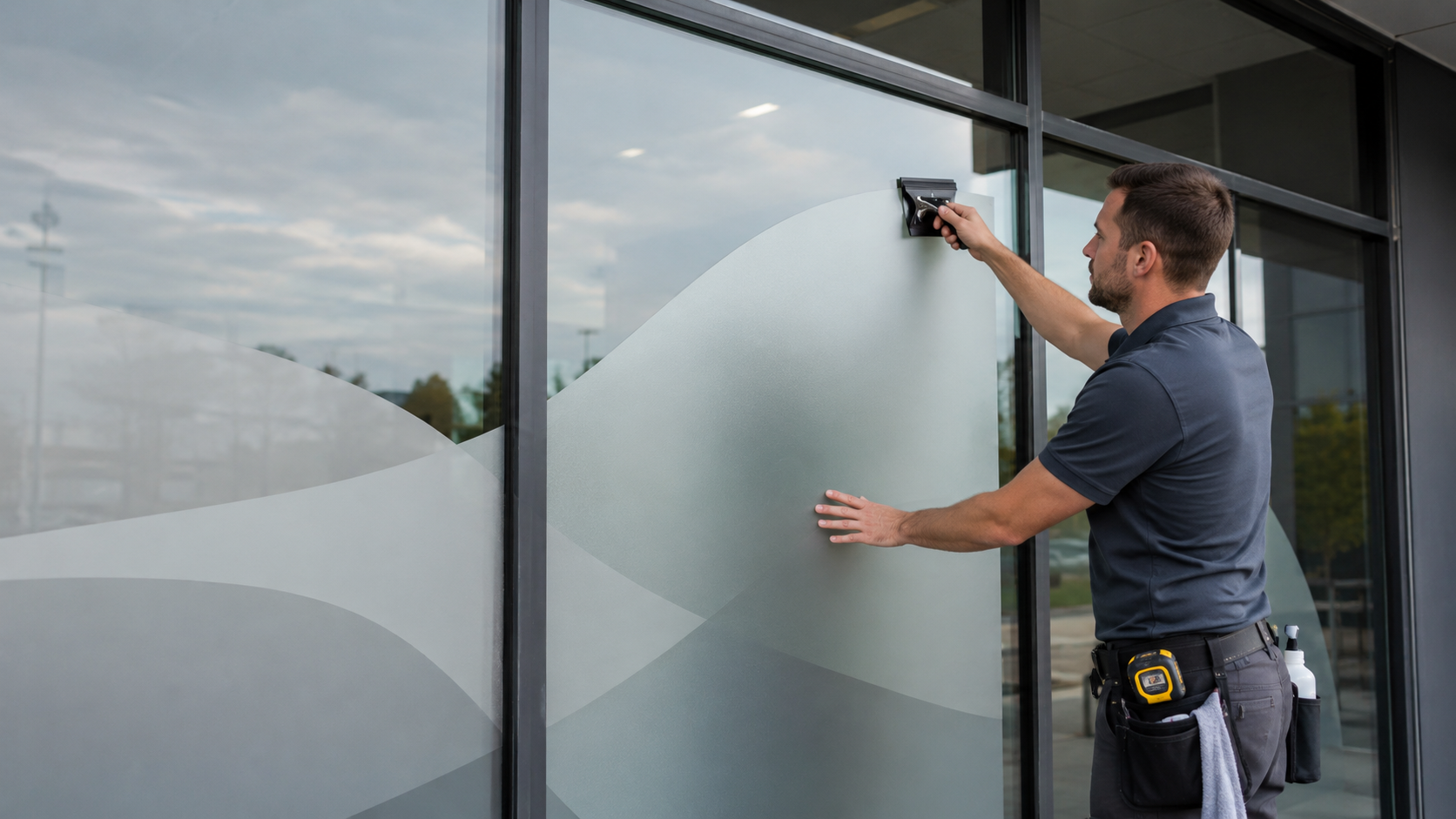
Here’s what a proper installation looks like, step by step:
- Check the glass: Look for coatings, cracks, or surface issues before ordering anything
- Two-stage clean: Detergent wash, then isopropyl alcohol wipe
- Wait: At least 30 minutes of dry time before applying anything
- Pick the right material: Cast vinyl for external graphics, calendered only for short-term internal use
- Check the temperature: Don’t apply outside the recommended range
- Apply from the centre out: This pushes air to the edges instead of trapping it
- Seal the edges: Same day, especially on cut graphics
- Re-inspect at 24 hours: In different lighting to catch anything missed
Vinyl Type: Which One Should You Actually Use?
| Feature | Calendered Vinyl | Cast Vinyl |
| Cost | Lower | 15–30% higher |
| Outdoor Lifespan | 2–3 years | 5–7 years |
| UV Resistance | Moderate | High |
| Flexibility | Stiff, shrinks over time | Flexible, dimensionally stable |
| Best For | Short-term indoor promotions | Permanent shopfront branding |
| Edge Behaviour | Lifts faster under heat and cold | Holds through temperature changes |
People Also Ask
1. How long do commercial window graphics last?
Cast vinyl with UV lamination lasts 5–7 years outdoors. Without lamination or with cheaper calendered material, expect 2–3 years before noticeable fading or adhesive failure.
2. Why are my storefront graphics peeling at the edges?
Usually moisture, ammonia-based cleaners, or an adhesive that wasn’t right for your glass coating. Edge sealing during installation prevents most of it.
3. What vinyl is best for Melbourne shopfronts?
Cast vinyl with a UV-resistant overlaminate. For businesses that still want light inside, perforated window film (also called one-way vision film) is a great option.
4. Should I replace faded window graphics or try to fix them?
Replace them. Fading is permanent. You can’t restore ink that’s been broken down by UV. Patching with new material just creates colour mismatches.
5. How do professional installers stop bubbles from forming?
Thorough surface preparation, correct vinyl selection, right temperature at install time, and a centre-out squeegee technique. There’s no shortcut that replaces those basics.
Final Words
Before you book anything, go outside and actually look at your graphics up close. Press on the bubbles. Check the edges. Look at the colour in direct sunlight versus shade. Take a few photos.
Then, when you speak to a signage professional, ask them what vinyl they plan to use and why. If they can’t answer that clearly, find someone who can.
If you’re in Melbourne and your window graphics are showing signs of wear, take a look at what properly done commercial signage looks like. Window and Wall Graphics can help you get it right the first time.
Because your shopfront is working for you 24 hours a day. It should actually look like it.